• art
  • writing
  • Art in Question
  • Bio
  • Menu

Lauren Elizabeth Shults

  • art
  • writing
  • Art in Question
  • Bio

A Personal Odyssey

August 20, 2021 in the american west

I once chose to go on the road for a month. I chose to exile myself for a chance to reconnect with an indiscernible thing I felt I had lost. I starved myself of the chance to create lasting friendships. I had momentary connections and the happiness that comes with knowledge of self-limited time. Everyone I’d meet would return to their own travels, to their own life. I felt impermanence and the effects of choosing to deprive myself of opportunity.

I got away from the friction of cities and let myself become a part of quiet beauty, still life, though I did not deserve that. I encroached on the mountain lion’s home, the meadows of the cattle, and the streams through which wild horses passed. I involved myself in their lives, walking paths they’d set for me with their tracks. I’d wait and listen for them, listen for the yell of the burro, for the javelinas that never came.

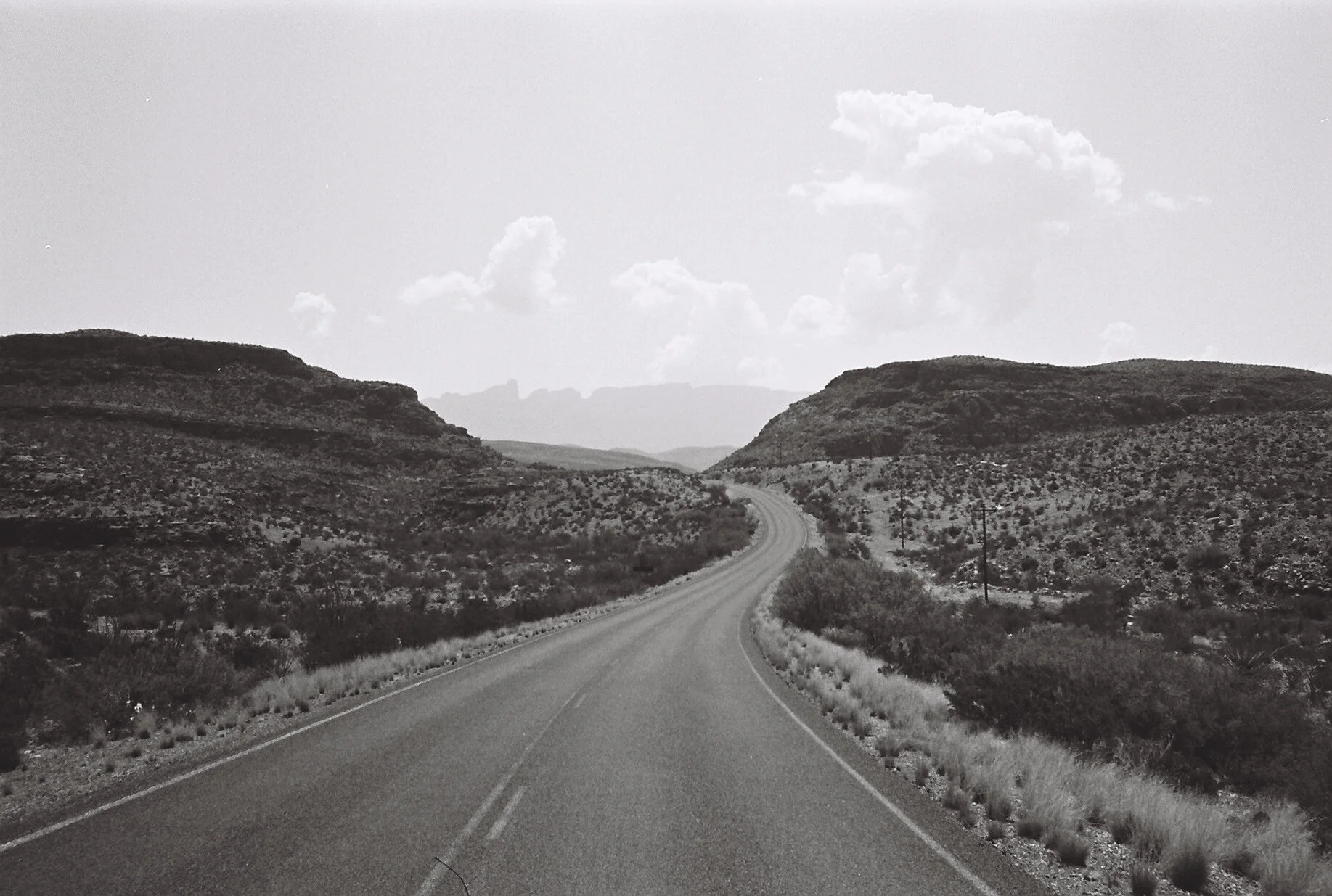
I ate little and began to feel my ribs rub against the rocks when I lay down to sleep. I drank the water of the earth, scooped it up into my hands, and sank myself into the wet sands of the Pacific coast and the Rio Grande and Colorado rivers and lakes of the American West. I felt rain droplets pelt my shoulders and face as I stood in monsoon storms and afternoon showers, replenishing the lands of bone-dry saguaros. I washed anew with 50¢ showers in the desert and lonely spring water faucets in the canyons.

I felt the wind. I let it blow through my hair at 80 mph and tangle my stringy red locks. I let it twist into dreads that I’d struggle to brush through hours later. Crimson strands covered my eyes, blocked my sight. I let the sun pour over it, bleach it to blonde and gold and pale coppers. I’d let myself laze in the sunshine, felt the rays that kissed more freckles upon my skin. A few times, I let it burn me. Burn me so badly I felt heat radiate from my skin as I had chills.

Comment

The Last of Wahweap Marina

August 04, 2021 in the american west

Lake Powell, Utah, Wahweap Marina

“Come grab a plate, dinner’s on,” is not something you hear shouted to you elect to camp alone.

There’s an unparalleled feeling of wonder when you go into the world alone.

Time falls away as you walk along a canyon rim, wade in glassy lakes and rivers, and try your damndest to identify constellations in the night sky. Solo travel is sublime.

I was sitting at a gas station in my Bug, sheltering myself from the 100° beating heat, as I Googled campsites in Page, AZ, outside of Lake Powell. I previously planned to drive right on through this region, justifying this by the fact that I’d already been here before, 10 years ago. Instead, I’d go to Escalante, another place I’d been to 10 years ago. Fractured logic, I know. Anyway, I decided myself foolish and tailed it to Lake Powell at the Wahweap Marina, just across the border into Utah.

I carefully steered onto packed sand along the water’s edge. I parked my Bug about 100 yards from the shoreline, between a young couple and a family of three.

Lone Rock stood in the water before me. Her majesty. I positioned my car to face north and create a few hours of shade to gaze at her from afar.

I took a dip in the lake, watching the sun pour onto the red walls. I overheard two girls speaking French—they were deciding what to do with the night: to swim more or to make dinner and set up camp. “Je ne sais pas quoi faire.” There was a young German couple who said they were driving a van across “The States.” A dog leaped to them, and they met the owners, another young couple driving across “America,” from Atlanta, Georgia. I’ll spare you the details, but both couples had two boxer dogs, making four altogether, and both lost one just weeks before going on their trips, making two boxers still living (only the American boxer was traveling across the country). Coyotes yipped to us all from the mesas on the other side of the lake.

In the water, grossly muddy, I fidgeted, feeling like the odd one there — I was alone. I decided to take a few more photos, but I really just wanted to enjoy the place without a distraction from any sort of activity. I stared and stared at the stone surrounding me. The Lone Rock of Lake Powell is somewhat like the lighthouse of the westernmost rim. You feel like it’s a place of importance, there at Whaweep, on the edge of the sprawling lake. Every few minutes, I’d grab handfuls of sandy mud to inspect the ridges and colors of shells buried in the sludge.

When the sun sank, I feebly watercolored the scene. A man who earlier waved hello to me from his truck brought over a chair and began to speak at me about the lake: when it was at its highest (the late 1980s, “see that line there, on that rock? We’d be underwater today,”), the last time it was as low as it currently is (1969, 50 feet below average), how many inches it is losing per day (3), how the lake was formed, the thin lines signifying time and droughts of the past, and on and on. After he inevitably asked the routine questions about me—who i am, what i’m doing, where i’m going—he parted with advice to sleep outside of my tent, beneath the stars, because “that’s what we do here.”

There’s a melancholic blanket that floats upon you as a solo traveler when you see a family—sometimes multiple generations—traveling together, couples, or groups of chattering friends. Hear a single line like “come grab a plate, dinner’s on,” When everyone runs toward the table to feast upon the food the matriarch’s dinner, the enormity of my surroundings, paint the colors draping my vision, and find my Aquarius in the sky.

But, I’m a fool to focus on being lonesome in such a grand place. My surroundings offer more than enough. But even so, there are strangers all around, looking to get to know me. People like this fellow who sat next to me, the family who introduced themself and offered to help me gather water, the Frenchman asking for suggestions of places to visit in Texas after he saw my car plates. We scatter the area. We’re all searching for community at places like Lone Rock, even if only on a micro-level. Feeling and seeing kindness imbues your experience of a place, expanding its magnitude beyond mere physicality.
Comment

Rancho Topanga

July 25, 2021 in the american west

New Mexico Visitors Center, Northwest of El Paso


I am writing this from one of the most beautiful rest stops I have ever seen. There are 18 picnic benches, all sheltered in mid-century modern white brick structures. The small buildings each rest on a loop positioned to overlook the Franklin Mountains at the southernmost western border dividing Texas and New Mexico. Wind is swaying the desert fauna, and thunder is rumbling at an almost constant rate. Bolts of lightning are striking the deep blue-grey peaks before me. This storm is unexpected, making it all the more ominous.

The temperature continues to fall below 75 degrees, much different from the 100 I experienced in southwest Texas. I’ve pulled on a sea green sweatshirt and pushed back my windswept bangs with a black bandana. I’m wishing I purchased the rain poncho I held in my hands for a few minutes back in an El Paso Wal-Mart. Alas.

Family travelers and solo vagabonds are filling the parking spots, truck drivers idling behind. Most are in their cars, but I’m giving Mother Nature the choice to strike me with her electric hands at number 18, the final building in the row.

Last night in a Terlingua campground, my site neighbor, Drew, suggested that I sleep in my Bug because my tent and I would be “done for” in the morning. He told me this with his eyebrows raised over his wire-rimmed transition glasses. “With your rubber tires, you won’t get hit by lightning, but that thing... I don’t know.” He offered to help me with my Nylon shelter minutes after it blew about 10 feet south into my picnic table. Lining the floor of the tent with heavy rocks was not enough for it to sustain the Chihuahua Desert winds. The storms are quick but brutal.

Drew, a man in his 70s, told me about his good friend, Jack, who spends his days hiking the mountains in and around Big Bend. “It doesn’t interest me at all, but at his age, I just let him do whatever it is he wants. Why not, at 75?” He boiled water on his camp stove as we spoke and offered me a cup of coffee, even though it was about 7:30 pm and still above 90 degrees. “I just patch him up when he needs it and make sure he takes his vitamins.” He sat, reclined in a foldable chair, began to smoke cigarettes one after the next, and watched the sun sink behind the mountains before retrieving Jack from his exhibition of the day. I retreated to my Beetle to get comfortable for the night.

The winds calmed, and stars revealed themselves from behind clouds. Before the pair of men returned, night settled, and the hot air began to dip into the 80s. I elected to set up my tent for the night once again, in hopes that I’d wake up in time to run to my car if the weather turned again. I drifted into a sound sleep next to Drew and Jack, murmuring about their days in the blazing desert and exchanging stories about the rabbits that are extremely comfortable with the strangers in the area.

“You’re still here!” Drew shouted as I crawled out of my tent in the morning light, cottontails all around. The night was better spent stretching across my blankets on the desert ground than in my cramped car, I told him. We smiled at each other and didn’t make much more conversation, each of us intent on packing up our cars before the heat descended upon the grounds. The golden light of the new day lifted me from the uncertainty of the night before.

I overheard Drew ask Jack if he’d made his appointment with his doctor and made sure he ate enough protein for breakfast. They wished me well on my journey and rolled out of the Rancho Topanga Campgrounds, onto the next leg of Jack’s adventure.

tularosa basin

July 19, 2021 in the american west

new mexico

“Seek freedom and become captive of your desires.” — Frank Herbert

Passing through towns and cities along the perimeter of the country, you’re required to roll through Border Patrol and answer a few questions: Just you in the car? Is there any marijuana in this vehicle? Where are you coming from? Where are you going? Why are you taking this route? Are you a U.S. citizen? Fear pulsates through you, and you fidget a little too much at every checkpoint, every time.

“The entrance to the park is just down the road, at the orange buildings.” After my second desperate interrogation at a checkpoint, I sweetly thanked the officer for directions to White Sands and sped away to the dunes, glad to be done with the berating.

As I pulled past the brown—not orange—visitors center, I gripped my steering wheel with one hand and a map in the other. Past the adobe structures, the earth glistened. I swirled my car onto the first white, gypsum-packed lot and came upon two tour buses with a collection of teenagers and chaperones standing outside. In the center of the crowd, a gold cross was raised into the sky, instruments were played, and everyone was dancing, or at least tapping their feet on the powdery flat. Boys and girls were snapping photos, smiling, giggling. I pulled my VW Bug to a stop, slung my camera strap over my shoulder, and hopped onto the white earth, eager to gaze upon the otherworldly dunes that the chattering group must’ve already seen.

It felt like a ritualistic experience walking into the loose sand for the first time with the chants and enthusiastic drum beats streaming from the youth group. Stardust dunes expanded before me and beyond my comprehension. The horizon faded into the soft late afternoon clouds, confusing land and sky. A sense of endless freedom was granted in the boundless territory. It was a new land to explore, devoid of the cluttering tourists often create. With the beating of the drums fading behind me, I was lost to everything but the moment I was in, awestruck. It’s impossible not to quickly disorient yourself in the sea of sand. The music was gone completely, and the vastness of the land seized me. I, mind and body, entered a great abyss. Then sirens broke my trance.

Turning in circles in the dunes, I couldn’t find where the sound was coming from. All I could see were the white waves and footsteps being swept into the breeze. The noise echoed from where I stood, and my stomach fell. I trudged back to the flat through the sand, and there was the fleet of police vehicles on the ivory roads, speeding deeper into the dunes. The gold cross was lowered, and the group gazed down the road. At the next salty lot, swaddled in crystalline hills, cop cars blared red and blue lights onto the sand. Families emerged from the dunes and gathered quietly. Looks of forlornness wiped across their faces.

Police circled a small, sun-bleached red car with a woman sitting in the driver’s seat. A man was held, leaning against a green-striped border patrol SUV. The scene was a stark contrast to the tranquil waves surrounding it.

The sea of sand at Tularosa Basin has to let out somewhere, and at that place might’ve been a ready vehicle with food, water, and a job in this country. The freedom sought in the dunes turned to denial, confusion, and a failed attempt to create a life in a new world. The little red car and the couple were towed away into a greater unknown than that felt in the dunes.


blog

Featured
Aug 20, 2021
A Personal Odyssey
Aug 20, 2021
Aug 20, 2021
Aug 4, 2021
The Last of Wahweap Marina
Aug 4, 2021
Aug 4, 2021
Jul 25, 2021
Rancho Topanga
Jul 25, 2021
Jul 25, 2021
Jul 19, 2021
tularosa basin
Jul 19, 2021
Jul 19, 2021